




¿Por qué duelen las muelas del juicio??
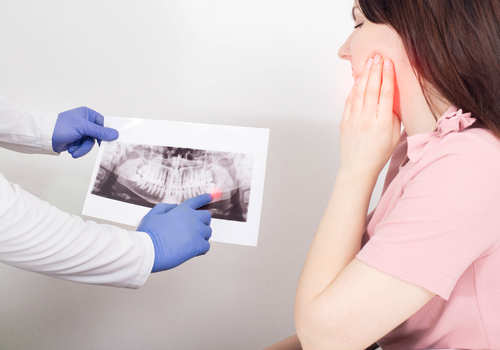 La mayoría de nuestros dientes permanentes emergen sin problemas ni dolor., excepto las muelas del juicio. Mientras que algunos individuos’ las muelas del juicio erupcionan sin problemas, otros experimentan un dolor considerable cuando sus terceros molares comienzan a emerger. ¿Por qué son las muelas del juicio?, que suelen ser los últimos dientes en salir, tan propenso a causar dolor?
Falta de espacio en la mandíbula
Una de las razones más comunes por las que duelen las muelas del juicio es que no hay suficiente espacio para que crezcan adecuadamente.. La mandíbula humana moderna suele ser demasiado pequeña para acomodar estos molares adicionales., llevando al hacinamiento, pressure, y malestar al empujar contra los dientes circundantes.
Impaction
Una muela del juicio impactada no erupciona completamente a través de las encías.. Puede crecer en un ángulo, permanecer atrapado debajo de la línea de las encías o el hueso, y presionar en el molar adyacente. Esto puede causar dolor agudo o punzante e hinchazón., e incluso provocar infecciones.
Infección o inflamación (Pericoronitis)
Cuando una muela del juicio atraviesa parcialmente la encía, Crea una abertura donde las bacterias pueden acumularse.. Esto puede provocar pericoronitis, una infección del tejido de las encías que rodea el diente.. Los síntomas pueden incluir dolor., mal aliento, un mal sabor de boca, y dificultad para abrir y cerrar la boca.
Caries o enfermedad de las encías
Las muelas del juicio se encuentran en la parte posterior de la boca., haciéndolos difíciles de limpiar. Como resultado, Son más susceptibles a las caries y a las enfermedades de las encías., que puede causar molestias importantes.
Presión sobre los dientes circundantes
Incluso si una muela del juicio está erupcionando normalmente, aún puede causar un dolor sordo o presión a medida que desplaza otros dientes en la mandíbula. Esto puede provocar una desalineación de la mordida o problemas de ortodoncia., particularmente en pacientes que han tenido aparatos ortopédicos.
¿Qué se puede hacer con el dolor de las muelas del juicio??
Si siente dolor por las muelas del juicio, es fundamental no ignorarlo. Aquí hay algunas opciones de tratamiento comunes.:
- Alivio del dolor sin receta: El dolor leve a menudo se puede controlar con medicamentos de venta libre., como paracetamol o ibuprofeno. Estos ayudan a reducir la inflamación y proporcionan un alivio temporal..
- Enjuagues con agua salada: Enjuagarse la boca con agua tibia con sal ayuda a mantener la zona limpia y reduce la inflamación., especialmente si las encías están doloridas o hinchadas.
- Buena higiene bucal: Mantener limpia el área alrededor de las muelas del juicio es crucial, especialmente si están parcialmente en erupción. Utilice un cepillo de dientes suave y use hilo dental con cuidado para evitar la acumulación de placa..
- antibióticos: Si hay una infección presente, Se puede recetar un antibiótico para controlar y reducir la infección..
- Wisdom Tooth Extraction: En muchos casos, extraer las muelas del juicio es la solución más eficaz a largo plazo, especialmente si los dientes están impactados, infectado, o causar aglomeración. La extracción se puede realizar bajo sedación intravenosa., nitrous oxide analgesia, y anestesia local. Implica un breve período de recuperación con algo de hinchazón y malestar..
Cuándo consultar a un dentista
Debe comunicarse con su dentista o el Centro de Cirugía Bucal e Implantes Dentales si:
- Experimenta dolor persistente en la parte posterior de la boca..
- Tus encías están rojas., hinchado, o sangrado cerca de las muelas del juicio.
- Tienes dificultad para masticar, hablando, o abriendo la mandíbula.
- Tiene un sabor desagradable en la boca o signos de infección..
El diagnóstico y tratamiento tempranos ayudarán a prevenir problemas más graves y a mantener la salud de su sonrisa.. Póngase en contacto con el Centro de Cirugía Bucal e Implantes Dentales en 813-968-5400 Para programar una consulta.
Los comentarios están cerrados.