



¿Realmente necesito un implante dental para un diente que me falta??
 ¿Realmente necesito un implante dental para un diente que me falta??
Losing one tooth may not seem like a big deal, especially if it is toward the back of your mouth. But even one missing tooth can affect your bite, jawbone, and long-term oral health.
Para muchos pacientes, a single-tooth implante dental is an excellent long-term solution. A consultation with an oral surgeon can determine whether a dental implant is right for you and help you understand why replacing a missing tooth can be important.
What Happens When You Lose One Tooth?
Your teeth are designed to work together. When one tooth is missing, the surrounding teeth can gradually shift into the open space. The opposing tooth may also move because it no longer has a tooth to bite against.
These changes can affect your bite and make the area more difficult to clean. Replacing the missing tooth with a dental implant can help restore function and maintain proper spacing.
How Does a Missing Tooth Affect Your Jawbone?
A tooth root stimulates the jawbone when you chew. After a tooth is lost, that stimulation stops, and the bone in that area can gradually shrink. This process is known as bone resorption.
Jawbone loss often happens slowly and without pain. The longer a tooth is missing, the more bone may be lost, potentially making future implant placement more complicated. En algunos casos, injerto de hueso or bone reconstruction surgery may be necessary before an implant can be placed.
What If My Tooth Has Been Missing for Years?
It is not necessarily too late for a dental implant. An oral surgeon can evaluate the amount of available bone and determine whether an implant can be placed immediately or whether bone grafting or reconstruction is needed first.
The sooner you have the area evaluated, the sooner you can understand your treatment options.
Why Choose a Dental Implant?
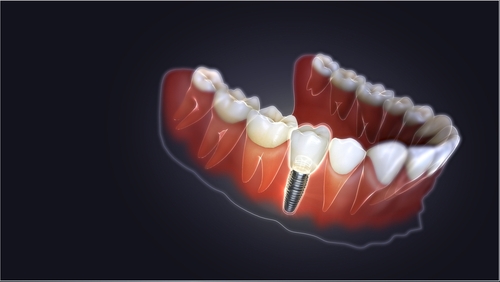
A implante dental replaces both the missing tooth and its root. The implant is placed directly into the jawbone and supports a custom dental crown designed to look and function like a natural tooth.
One of the biggest advantages of a single-tooth dental implant is that it stands independently. Unlike a traditional dental bridge, an implant does not require reshaping and permanently damaging healthy neighboring teeth for support.
Dental implants can also help preserve the jawbone by providing stimulation similar to a natural tooth root.
If you are considering dental implants in Tampa, Dr. Valiente can evaluate your jawbone, surrounding teeth, and overall oral health to determine whether you are a good candidate.
Is a Dental Implant Better Than a Bridge?
Para muchos pacientes, a dental implant offers significant advantages over a traditional bridge. A bridge relies on neighboring teeth for support and typically requires removing healthy tooth structure from those teeth.
A dental implant replaces the missing tooth independently, helping preserve the natural neighboring teeth while also supporting the jawbone.
While every patient is different, a dental implant is often considered a preferred long-term option for replacing a single missing tooth.
Should I Replace My Missing Tooth?
Even if a missing tooth does not bother you, it is worth having the area evaluated. Leaving a gap can contribute to changes in your surrounding teeth, morder, and jawbone over time.
Para muchos pacientes, a dental implant provides the most natural and comprehensive solution by replacing both the tooth and its root.
If you are in Tampa and have a missing tooth, llamada 813-968-5400 a schedule a dental implant consultation with Dr. Valiente at Centro de Cirugía Oral y Prótesis Dental.
Los comentarios están cerrados.