



Opciones de injerto óseo para implantes dentales
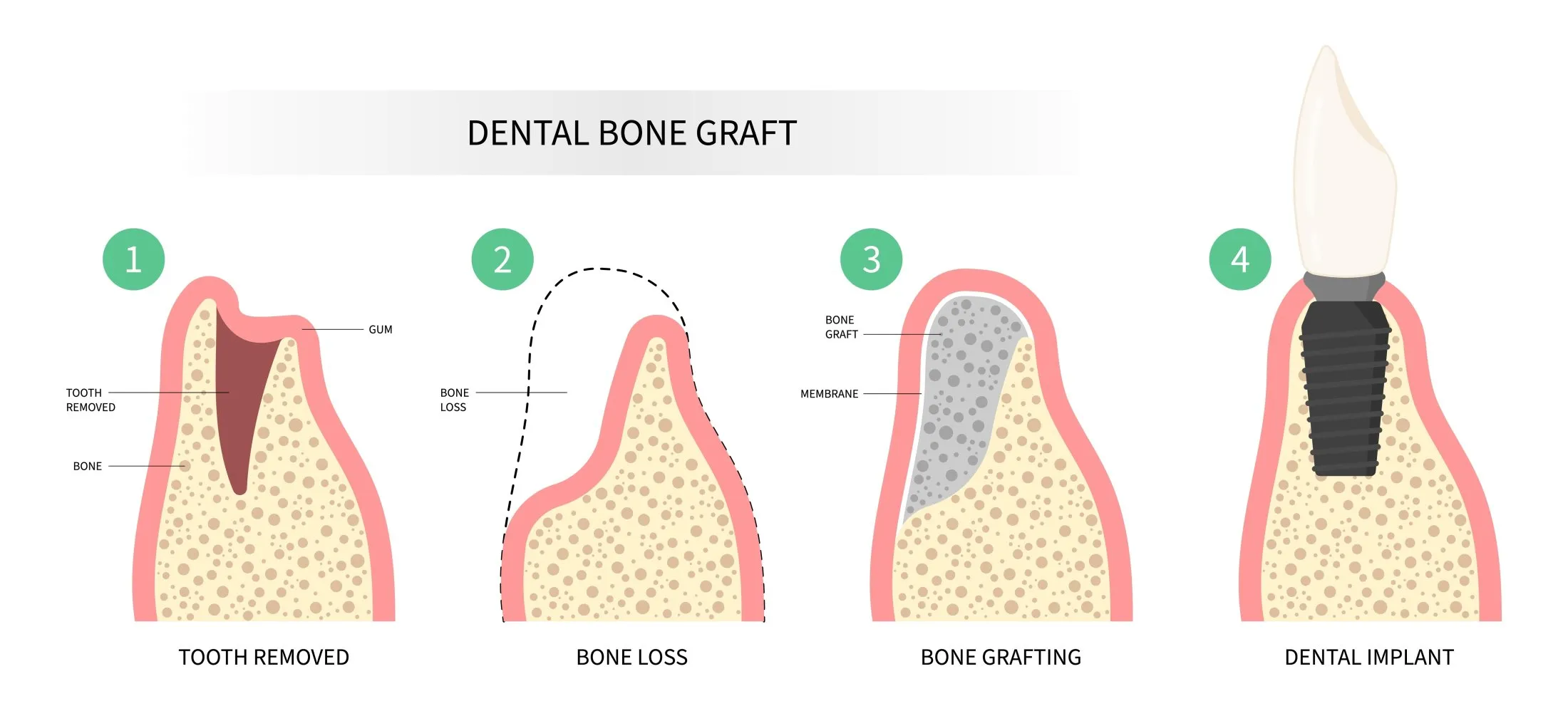
Not everyone has enough jawbone volume or density to support implantes dentales. por suerte, injerto óseo can often add the volume or density needed to support implants. Dr.. Valiente has performed hundreds of bone grafting surgeries to address the lack of bone for dental implant patients. Dependiendo del sitio del implante y otros factores., he may suggest one or more of the different types of injerto óseo para implantes dentales.
Elevación de senos nasales
A sinus lift, or sinus floor elevation, increases the amount of bone in the upper jaw in the area of the molars and premolars. This procedure is often necessary when there is insufficient bone height in the back of the upper jaw to support implants.
The procedure involves lifting the sinus membrane, which lines the sinus cavity, and placing bone grafting material underneath it. A través del tiempo, the bone graft integrates with the patient’s existing bone, promoting new bone growth and providing a stable foundation for dental implants.
Aumento de la cresta
The ridge of the jaw is the bone that surrounds the roots of teeth. When a tooth is removed the bone surrounding the socket degenerates and with time the height and width of the socket will continue to deteriorate. If the jawbone ridge doesn’t have enough width or height to support dental implants, Dr.. Valiente may perform ridge augmentation surgery to accommodate and support the implant. Ridge augmentation is often needed if the patient’s teeth have been missing for a long time because the jawbone deteriorates without a tooth root to stimulate it.
Dr.. Valiente exposes the jawbone during surgery and carefully places the bone graft material. He may cover the area with a barrier membrane to protect the site and encourage new bone growth. Sobre 3-6 meses, the bone grafting material fuses with the jawbone, and new bone growth develops, providing a stable base for dental implants.
Preservación del zócalo
Socket preservation is a way to preserve the jawbone ridge after extracción del diente. The bone grafting material is placed in the tooth socket immediately after a tooth extraction to fill the space and prevent the empty socket from collapsing. A través del tiempo, the graft material osseointegrates with the surrounding bone, establishing a strong foundation for future colocación de implantes.
If you are considering dental implants but have been told in the past that your jawbone can’t support the implants, you may discover you are now a candidate for dental implants. New advancements in bone grafting techniques and the use of materials that stimulate bone growth and healing (including bone morphogenetic protein and platelet-rich plasma) have dramatically improved outcomes for patients with insufficient bone.
Dr.. Valiente regularly performs bone grafting for patients seeking dental implants. If you are interested in dental implants, Dr.. Valiente can discuss your options and whether you may need bone grafting before beginning the implant process. To learn more, por favor póngase en contacto con nuestra oficina al Número de teléfono de la oficina del Centro de Cirugía Bucal e Implantes Dentales (813) 968-5400 para programar una consulta.
Los comentarios están cerrados.