



Everything You Need to Know About Impacted Canines
 When people think of impacted teeth, wisdom teeth are usually the first to come to mind. But another tooth that often gets trapped in the jaw or gums is the canine. These pointed teeth on either side of the mouth in the upper and lower jaws play a key role in biting, guiding your bite into proper alignment, and shaping your smile. When one doesn’t erupt as expected, it can lead to functional and cosmetic challenges.
What Is an Impacted Canine Tooth?
A canine tooth is considered impacted when it fails to emerge into its normal position in the mouth. Most canine impactions occur in the upper jaw. They are often discovered during routine dental visits or around the early teenage years when these teeth are supposed to erupt.
Why Do Canines Become Impacted?
Several factors can interfere with the natural eruption of canine teeth:
- Crowding: Not enough space for the tooth to move into its proper spot.
- Misaligned eruption path: The tooth may angle incorrectly and drift off course.
- Early loss or prolonged retention of baby teeth: Baby teeth that remain too long or fall out too soon can change the eruption pattern.
- Genetics: Family history can influence root shape, jaw size, and tooth spacing.
- Obstacles in the path: Extra teeth or cysts may block normal eruption.
Common Signs and Symptoms
Sometimes an impacted canine causes noticeable issues; other times, it isn’t noticed until a dentist diagnoses it during a routine checkup. Symptoms may include:
- A missing or delayed permanent canine
- A retained baby canine tooth
- Swelling or tenderness in the gum area
- Pressure or discomfort in the upper jaw
- Teeth shifting or changes in bite alignment
Dental X-rays and sometimes a cone beam/CT scan are usually needed to confirm the tooth’s position and determine whether it is stuck in the roof of the mouth, angled toward another tooth, or lodged in the bone.
Why Impacted Canine Teeth Matter
Canines are important for both function and aesthetics. They guide your bite when you move your jaw, support facial contours, and create a balanced smile. An untreated impacted canine tooth can lead to:
- Damage to nearby teeth or roots
- Misalignment of the bite
- Cyst formation
- Difficulty with future orthodontic movement
- Gaps or asymmetry in your smile
Treatment Options
Management usually involves a collaborative approach between your general dentist, orthodontist, and oral surgeon. Treatment is highly individualized, but common solutions include:
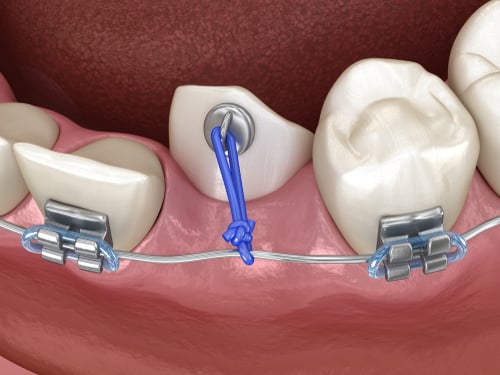
- Exposure and Bonding
One of the most common procedures for impacted canines.
- An oral surgeon uncovers the hidden tooth by lifting the gum tissue.
- An orthodontist attaches a chain to slowly guide the tooth into its proper position
If the impacted tooth is severely displaced, fused to the bone, or interfering with surrounding teeth, removal may be recommended. An oral surgeon is typically required for the extraction due to the procedure’s complexity and the tooth’s location. The gap left may be filled later with a restoration or through orthodontic intervention.
- Orthodontic Treatment
Braces or clear aligners may be used before or after surgery to prepare space for the canine or to move it into position once exposed.
- Monitoring
In younger patients, monitoring and imaging may reveal that a canine is moving out of position. Early intervention at this stage can redirect the tooth and reduce the need for surgery later.
What to Expect From the Procedure
Exposure and bonding or extraction are typically performed by an oral surgeon under local anesthesia and nitrous oxide anxiolysis or intravenous sedation for comfort. Most patients experience mild swelling or soreness afterward, which can be managed with medication and soft foods. Follow-up with an orthodontist is key, as the tooth will gradually be moved into place over several months.
Early Detection Makes a Difference
Regular dental checkups during childhood and adolescence are the best way to catch potential canine impactions before they become more complicated. Early X-rays allow dentists to spot developing issues and coordinate timely care that promotes better outcomes.
The Role of the Oral Surgeon
Impacted canine teeth are common and highly treatable with modern oral surgery and orthodontic techniques. In most situations, oral surgery is the first step before orthodontics can be placed on the tooth. Whether discovered early or later in life, a well-planned approach can protect nearby teeth, support proper bite mechanics, and keep your smile healthy for years to come.
If you have concerns about a missing or delayed canine tooth, a visit with Dr. Valiente at the Center for Oral Surgery and Dental Implants can determine whether your or your child’s canine tooth is impacted and, if so, whether surgery is needed before your dentist or orthodontist can move forward with the next step. To schedule a consultation, please get in touch with our office at Center for Oral Surgery and Dental Implants Office Phone Number (813) 968-5400.
Comments are closed.