


Do I Have Impacted Canine Teeth?
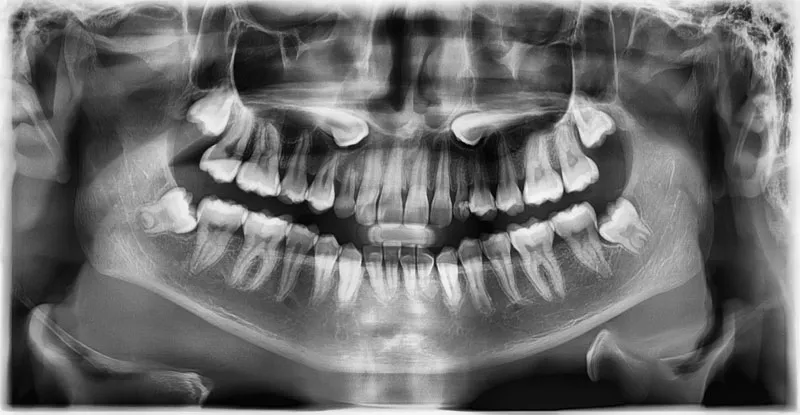
An impacted tooth is a tooth that can’t break through the gum and properly erupt into position. Many people assume that wisdom teeth are the only teeth that become impacted. However, any tooth can become impacted, and the cuspids or canine teeth are also prone to impaction. These teeth are located at the front corners of the dental arches. They are very important as they help shape your face as they develop, and guide your mouth into position when you bite.
What Causes an Impacted Canine Tooth?
The canines usually emerge around the age of 10-12. However, if the teeth do not come in properly or are delayed, it is said to be impacted. For some individuals, the teeth are blocked from emerging properly because the primary or baby canine teeth are not lost at the appropriate time, forcing the adult teeth to stay in the jawbone or erupt in the wrong place. The two upper canines are most likely to become impacted.
Impaction of the canine teeth can also result from trauma to the jawbone, genetic predisposition, or environmental factors. Genetic issues that can lead to impacted eye teeth include an unusually small mouth, extra teeth in the jawbone, and crowded teeth.
Signs You Have an Impacted Canine Tooth
- A gap where the impacted tooth should have emerged
- A throbbing, persistent toothache
- A tooth partially emerging from the gums above the other teeth or in the roof of the mouth.
- Red, inflamed, or tender gums
- Pain when opening or closing the mouth or chewing
- Chronic bad breath that doesn’t go away with brushing
- An odd, sometimes metallic, taste near the impacted tooth
- Persistent headaches
Treatment Options for Impacted Canine Teeth
The best approach to treating impacted canine teeth depends on how early the problem is diagnosed and addressed. The older a patient is, the less likely that the impacted canine teeth will move into place. If you are diagnosed with an impacted canine, your oral surgeon will work closely with an orthodontist to create a treatment plan. This may include orthodontia to open up a space for the tooth to emerge into place naturally, with or without oral surgery to reposition or remove the tooth. If surgery is needed, a cone beam/CT scan is done to assess the exact position of the impacted canine.
Oral surgery can help by exposing, mobilizing, and bonding a bracket and chain to the canine tooth, so your orthodontist can guide it slowly into the proper position. The goal is always to save the teeth rather than extract them whenever possible. If orthodontic treatment fails, removal of the tooth and placement of a dental implant may be the best solution. To learn more about how Dr. Valiente can resolve issues with impacted canine teeth, please visit our page on exposure of impacted teeth.
If your canine teeth have not emerged by age 13, an evaluation by your dentist should be arranged. If the canines are impacted, Dr. Valiente can help. Contact our office at Center for Oral Surgery and Dental Implants Office Phone Number (813) 968-5400 to schedule a consultation.
Comments are closed.